
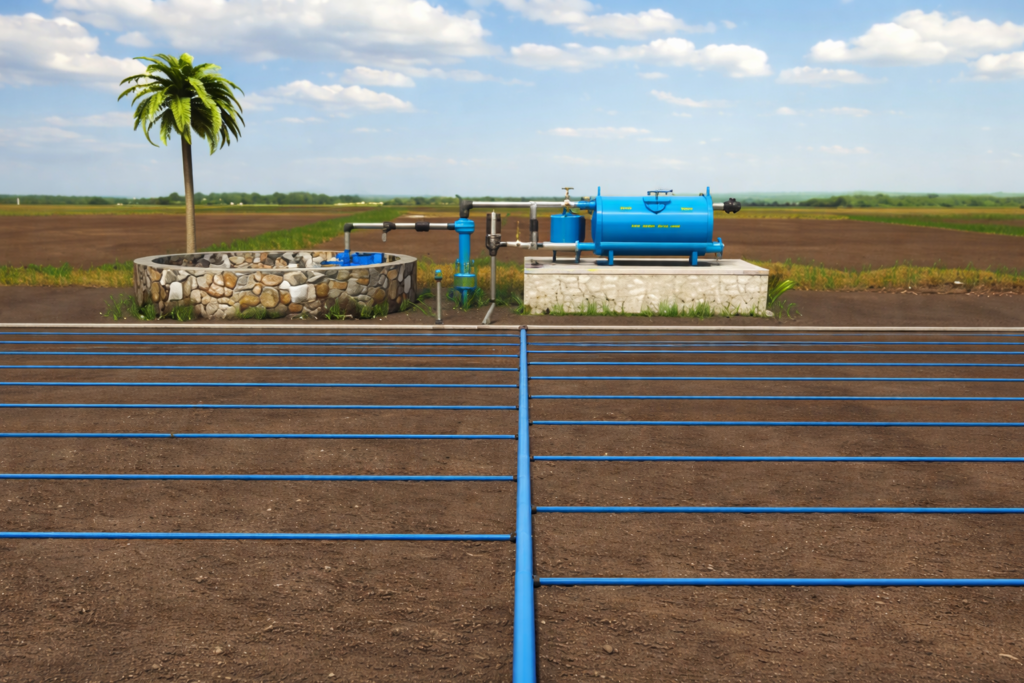
Water management plays a critical role in modern agriculture and gardening. Traditional irrigation methods often waste large amounts of water and fail to deliver moisture efficiently to plant roots. As water scarcity becomes a growing global concern, farmers and gardeners are turning toward smarter and more sustainable irrigation techniques.
One of the most efficient solutions is the drip irrigation system. This innovative irrigation method delivers water slowly and directly to the root zone of plants, reducing wastage while improving plant health and productivity. Because of its efficiency and sustainability, drip irrigation has become an essential technology for modern farming and home gardening.
What Is Drip Irrigation?
Drip irrigation is a watering system that delivers water directly to the roots of plants through a network of pipes, tubes, emitters, and valves. Instead of flooding the soil or spraying water across large areas, this system releases water slowly in small droplets near the plant roots.
This targeted irrigation method ensures that plants receive the exact amount of water they need while minimizing evaporation and runoff. Because the water is delivered precisely where it is needed, plants can absorb moisture more efficiently and grow healthier.
Why Drip Irrigation Is Important
Conventional irrigation systems such as flood irrigation or sprinkler systems often lead to water wastage and uneven moisture distribution. Drip irrigation addresses these issues by providing controlled watering directly to the plant root zone.
The importance of drip irrigation is growing as farmers aim to conserve water, increase crop productivity, and reduce environmental impact.
- It significantly reduces water wastage.
- It improves plant growth by maintaining consistent soil moisture.
- It helps prevent soil erosion and nutrient loss.
- It reduces weed growth by watering only the plants.
- It supports sustainable and environmentally friendly agriculture.
How a Drip Irrigation System Works
The working principle of a drip irrigation system is simple but highly effective. Water flows from a source through pipes and tubing until it reaches small emitters placed near plants. These emitters release water slowly, ensuring the soil around the roots remains moist without becoming waterlogged.
The controlled release of water helps maintain consistent moisture levels in the soil, which is essential for healthy plant development.
Main Components of a Drip Irrigation System
A drip irrigation system consists of several components that work together to distribute water efficiently across the garden or farm.
1. Water Source
The water source is where the irrigation system begins. It may include a water tank, borewell, reservoir, or municipal water supply. A reliable water source ensures consistent irrigation throughout the growing season.
2. Mainline Pipe
The mainline pipe transports water from the source to the irrigation area. These pipes are typically made of durable materials like PVC or polyethylene and are designed to handle higher water pressure.
3. Lateral Pipes
Lateral pipes branch off from the mainline and run along rows of plants. These pipes carry water to the emitters positioned near each plant.
4. Emitters or Drippers
Emitters are small devices attached to drip lines that release water slowly at a controlled rate. They ensure that each plant receives the appropriate amount of water.
5. Filters
Filters remove dirt, sand, and debris from water before it enters the irrigation system. This prevents clogging and ensures the emitters function properly.
6. Pressure Regulator
A pressure regulator controls the water pressure within the system. Proper pressure ensures that water flows evenly through the pipes and emitters.
Benefits of Drip Irrigation
Drip irrigation provides several advantages for farmers, gardeners, and the environment.
1. Water Conservation
Because water is delivered directly to plant roots, drip irrigation minimizes evaporation and runoff. This makes it one of the most water-efficient irrigation systems available.
2. Healthier Plant Growth
Consistent soil moisture helps plants develop stronger root systems and improves nutrient absorption. This results in healthier crops and higher yields.
3. Reduced Weed Growth
Since water is applied only to the plant root zone, surrounding soil remains relatively dry. This discourages weed growth and reduces competition for nutrients.
4. Lower Labor and Maintenance
Drip irrigation systems can be automated using timers and controllers. Once installed, they require less manual effort compared to traditional watering methods.
Where Drip Irrigation Can Be Used
Drip irrigation is suitable for many agricultural and gardening applications.
- Vegetable farming
- Fruit orchards
- Greenhouses
- Landscape gardens
- Home and terrace gardening
Challenges of Drip Irrigation
Although drip irrigation offers many benefits, it also has a few challenges. The initial installation cost may be higher than traditional irrigation systems, and regular maintenance is required to prevent clogging in emitters.
However, the long-term savings in water, labor, and improved crop productivity usually outweigh these challenges.
Conclusion
Drip irrigation is a revolutionary technology that helps farmers and gardeners use water more efficiently. By delivering water directly to the root zone of plants, it improves crop health, conserves water, and supports sustainable agriculture.
As the demand for sustainable farming practices grows, drip irrigation will continue to play a vital role in modern agriculture. Adopting this efficient irrigation method can help ensure better yields, healthier plants, and responsible use of water resources.